Abstract
India is the world’s third largest energy consumer due to rising incomes and significant improvements in the quality of life for its 1.4 billion inhabitants. India’s economic growth relies heavily on its energy security, the resilience of its energy systems which face a range of potential threats, and the reliability of energy and electricity for consumers. Additionally, as the impacts of climate change threaten environmental security India must make difficult tradeoffs between rapid economic growth and long-term environmental sustainability. India is heavily dependent on fossil fuels and especially dependent on coal. The overreliance on coal presents a unique threat to its cities, which are among the most polluted in the world. Most of the country’s oil and gas is imported which creates political, and economic vulnerabilities and has important implications for the country’s energy security. India’s nascent civil nuclear programs have been challenged by a complex regulatory environment at the global and domestic levels. Currently, nuclear energy represents a small fraction of India’s energy mix despite the goal to increase nuclear output as a part of the country’s aim to adapt its energy system to renewable sources. This paper will present an overview of India’s energy mix, current research on the triple concerns of energy security, resilience, and reliability in India, and provide policy prescriptions that are aimed at managing India’s energy and environmental security needs in the context of climate change, rapid urbanization, industrialization, and energy demand in a complex geostrategic region.
Introduction: The Energy Trilemma in Emerging Economies
In contemporary societies, there is a link between energy and environmental security, economic growth, and human welfare (Singh, K., & Kaur, 2022). Emerging economies must balance the difficult tradeoffs between economic and environmental security when making policy decisions about energy consumption, extraction, and trade. High-growth markets require large amounts of energy. However, the global shift towards renewable energy and an increasing focus on environmental sustainability impact the way energy is consumed. For many emerging markets, there is a unique challenge of supporting the needs of a population with rapidly increasing incomes. According to the IMF, 20 emerging market economies, including China, Brazil, India, and others, are considered as such based on five factors, including population, nominal GDP, the share of global debt and world trade, and GDP per capita (Duttagupta & Pazarbasioglu, 2021). Among these, India’s rapidly growing importance in the global energy trade makes the South Asian country a key consideration in studying energy and environmental security (IEA, 2021).
Financial analysts project that India will drive at least a fifth of the globe’s economic growth, and the country’s population may have surpassed China’s within this year. Currently Prime Minister Narendra Modi is attempting to leverage India’s role as the G20 President in 2023 to transition the country into a position of global leadership in politics, manufacturing, and security (Qatar Tribune, 2023). According to the International Energy Agency’s (IEA) report, India Energy Outlook 2021, “All roads to successful global clean energy transitions go via India” because of the country’s unique position in the global energy economy. To achieve continued growth and stability while leading in the shift to renewable energy India will have to balance tradeoffs within energy and environmental security by building resilient energy systems capable of withstanding shifts in climate and the twin threats of extreme weather and malign actors to maintain energy reliability for its still growing population amid rapid urbanization and industrialization.
There are significant challenges to balancing the nexus of energy and environmental security, resilience, and reliability in India. Currently, more than half of India’s energy needs are supplied by domestically produced coal which has contributed significantly to the country’s share of CO2 emissions and an ongoing battle against the harmful effects of pollutants (Sharma, 2019). According to Sharma (2019), India only has 0.8% of the global oil and gas endowment and therefore imports some 70% of the 36% of its energy mix that is oil and gas. The reliance on imports creates energy dependency and highlights the important role of strategic diplomacy with its neighbors, and particularly oil-producing nations. There is also a significant need to build a resilient energy system to support national security. Threats of extreme weather, cyber and traditional attack require that India build a resilient energy system in a complex geostrategic environment and a diverse topography that is among the world’s top ten most vulnerable to climate-change induced extreme weather events (Abinash, & Wadhawan, 2021). Energy resilience requires investment and is proactive in recognizing the inevitability that some threats to energy systems will be realized. Resilience is necessary to ensure that energy systems are accessible and reliable to achieve sustainable economic growth and stability that will enable India to achieve its development goals and support the well-being of its population. Reliable energy and electricity are important to growth, but they are also key determinants of an equitable society wherein access to energy is universal.
Since the start of the 21st century, India has achieved near-universal access to electricity increasing energy access by some 900 million people (IEA, 2020). This remarkable feat was achieved by a range of factors including market sector liberalization enabling increased private investment, growth in renewable energy, and strategic policy implementation (IEA, 2015). Government policy regulating and supporting the energy and environmental security, resilience, and reliability nexus is essential to supporting these metrics of human well-being, particularly in the context of a global energy transition. Recognizing the importance of policy, this paper will present an overview of India’s energy mix, current research on the triple concerns of energy security, resilience, and reliability in India, and provide policy prescriptions that are aimed at managing India’s energy and environmental security needs in the context of climate change, rapid urbanization, industrialization, and energy demand in a complex geostrategic region.
Literature Review
The focus of this paper is on energy and environmental security, resilience, and reliability therefore it is important to provide definitions of these terms and background information on their development and saliency. Each of these terms has areas of overlap yet important distinctions that are necessary to know to understand their role in energy discourse. Firstly, a range of definitions have been used for energy security, yet they primarily focus on the availability of energy to meet a country’s needs.
Energy and Environmental Security, Resilience and Reliability
According to the World Energy Council (WEC) (2022), which publishes the annual World Energy Trilemma index, energy security means not only meeting existing and yet-to-come demand but also the capacity to mitigate the economic effects of supply disruption. Comparatively, the IEA (2022a) emphasizes affordability stating, “The IEA defines energy security as the uninterrupted availability of energy sources at an affordable price” and differentiates between the short ability to respond to supply and demand conditions and the longer-term ability to invest in energy systems that will support development goals and environmental imperatives. According to Deese (1979) the most important political and economic actions that can be taken by governments to ensure the availability of energy include developing domestic supplies and guaranteeing exogenous energy supplies. The lack of a universal definition for energy security, “can be partially explained by substantial variations among energy and political systems in the world” (Novikau, 2020, p. 2). However, according to Novikau (2020) despite the differences in energy systems there are inevitable similarities and lacking a universal definition of energy security does not prohibit assessing a state’s capacity to provide the energy needed to support human wellbeing. These definitions also demonstrate the overlap between energy security and resilience.
As noted by the WEC (2022) energy security requires supply and the ability to respond to supply shocks. To do so, energy systems must be protected against extreme weather events and changes in climate as well as cyber and physical attacks from malign actors. Resilience is the ability to withstand and rebound from a various disruption, which is difficult to predict and plan for. Recent research conducted by Ahmadi et al., (2021) explores resilience factors through quantitative research designed to understand their relation to disruption better. The research utilizes this definition, “energy system resilience includes avoiding, resistance, adapting to, and recovering from disruptive events” (Ahmadi et al., 2021, p. 6). The study builds on previous research conducted by Rehak et al., (2019) that presented a narrower conceptualization of resilience as reducing exposures to disruption and Zhang & Peeta’s (2011) work focused on the ability of communities to prevent economic fallout of disruption through building resilient energy systems. Finally, the ability to mitigate disruption is linked to energy reliability because if communities are not capable of responding to risk factors when they occur or even provide consistent access to energy and electricity it will challenge development and degrade human well-being. A lack of energy reliability is most impactful at the consumer level where electricity is an all-important aspect of modern life. Osborn and Kawann (2002, p. 2) define reliability as, “the ability of the power system components to deliver electricity to all points of consumption, in the quantity and with the quality demanded by the customer”. There is less debate in academia and policymaking circles about the definition of energy reliability than energy security, and resilience. These concepts can be applied to country specific contexts to better understand how different approaches to supplying energy can either benefit or harm communities. Utilizing India as a case study, it is key to provide a historical overview of the relevant factors influencing the country’s approach to the energy and environmental security, resilience, and reliability nexus.
India’s Post-Independence Economic Development
In 1947 post-Independence India the economic policy developed by the country’s first Prime Minister Jawaharlal Nehru was characterized by a centrally planned economic model with strict controls placed on international trade, prices, and capital meant to support industrialization and domestic production (Lal, 2008). According to Drèze, and Sen, (2010) Nehru’s vision for a pluralistic, democratic India was rare in the context of the post-colonial developing world. The principal architect of its government and established an important idealized version of a country that would eradicate inequalities, poverty, and disease through self-sustained growth. The corresponding economic and social policies implemented by Nehru and many of the administrations to come in the decades that follow however, overpromised and underdelivered on that promise of equal opportunity (Drèze, & Sen, 2010). The state-led system of economic development was deeply flawed and policies of “Nehruvian Socialism” such as import substitution industrialization (ISI) proved ineffectual (Ezell, & Atkinson, 2014). Growth was however higher than it had been under the British Raj which concealed the ineffectiveness of the state-led model for several decades. Spurts of growth were difficult to sustain however and economic challenges grew from the 1960’s onward wherein an economic growth rate of 3.5% and a rate of population increase at 2.2% led to a dismal increase of income per capita of just 1.3% until the 1980’s (Lal, 2008). Nehru’s vision of eradicating poverty was not realized through state-led economic policies and in the late 1980’s to early 1990’s market liberalization began with the goal of reversing India’s stagnant economic output.
Following oil shocks created by the Gulf War, India faced a balance of payment crisis after which further liberalization and integration into world markets became conditions attached to an IMF bailout package and structural readjustment program (Ezell, & Atkinson, 2014). The economy was increasingly liberalized and inefficient state programs reduced. Since, the Indian economy has grown to become the fifth largest in the world by GDP overtaking the United Kingdom (Armstrong, 2022). This increase in economic output has significantly enlarged the demand for energy across industrial, commercial, and private demand. The economy is not without its challenges in the current day including widespread unemployment, inflation, and the effects of the global Covid-19 pandemic. Energy security, resilience, and reliability is central to the ability for India’s economy to continue to grow. (Harriss-White, & Heyer, 2014; Drèze, & Sen, 2010: Sharma, 2019).
Current Energy and Environmental Challenges and Policy Implications
Currently a range of energy issues and environmental concerns present challenges for the Indian economy and the wellbeing of the country’s rapidly growing population. The foremost energy issues in India currently are energy and electricity shortages, dependency on energy imports, and an unsustainable energy mix IEA (2021c.) Certain aspects of the country’s energy issues overlap with environmental concerns and as the impacts of climate change increasingly effect economic output and human wellbeing maintaining the health of India’s environment will become progressively more urgent. The principle environmental security concerns in India include, water and air pollution, extreme weather events, and population pressure on natural resources (Igini, 2023). Addressing energy challenges and environmental concerns will require tradeoffs, however, it is also possible to increase energy security through effective environmental security policy and vice versa.
For policymakers the challenge is to implement short term policy that adequately addresses areas of crisis such as pollution levels and electricity shortages with a clear vision for how those short-term measures will support medium term goals like reducing dependency on foreign imports, and long-term goals such as developing a more robust nuclear sector. According to Chandra, (2015, p. 5) since the 1970’s India has enacted environmentally focused legislation such that today “India has about two hundred laws dealing with environmental protection”. However, enforcement has been a significant challenge and the regulatory environment and much of this policy has proved ineffective. As well the IEA (2015, p. 16) describes India as being “reluctant” to participate in international policy aimed at mitigating climate change that might impede its domestic industrialization efforts. Despite hesitance to join global initiatives environmental security has been among India’s three most important policy areas that also include providing universal access to electricity and reducing dependency on imports. Energy policymakers, policies, and their implications (Janardhanan, 2017; IEA, 2015; IEA, 2022c)
The policy initiatives aiming to provide universal electricity access have been largely successful. Currently, some 96.7% of Indian households have access to electricity and access has considerably improved in rural India in the last decade (Agrawal, et al. 2020). Policy aimed at establishing energy independence has produced fewer results. A 2014 report by McKinsey & Company (p. 5) imported “80 per cent of its oil, 18 per cent of its gas, and now even 23 per cent of its coal” with recommendations for how the country could make substantial progress towards energy independence in the year 2030. The report also outlined steps the country could make to reduce dependency on imports including tapping into the potential for unconventional gas, investments in renewables such as solar and wind, and establishing better efficiency practices in transport and industry (McKinsey & Company, 2014). However, even though reducing energy imports has remained a clearly outlined policy goal throughout the Modi administration since 2014 crude oil production has dropped and imports have continued to rise creating significant geopolitical risks and market vulnerability (Bhatti, 2021). The goal of producing a higher percentage of India’s energy needs domestically has been pushed back by the Modi government to the year 2047. In the aftermath of the Russian invasion of Ukraine the implications of energy dependence on foreign states have become starkly apparent. India’s lack of domestic oil and gas supplies creates political vulnerabilities that could impact the country’s sovereignty. One key metric of a country’s energy security is the percentage of domestic energy weighed against the amount that is imported in their energy mix. Importing nearly all of India’s oil and gas creates energy insecurity and the threats of price volatility and an erosion of Indian sovereignty must be addressed through policies that increase domestic energy supplies.
Policy Proposals
Effective policy is of paramount importance to addressing the energy and environmental security, resilience, and reliability challenges facing India. The government must use regulation and incentives to ensure that the country is able to meet its energy needs and protect the environment to ensure that it will support human wellbeing and prosperity into the future. Policy must address pollution, energy and electricity crises and be implemented with the requisite urgency to address immediate issues but also be linked to medium- and long-term goals. As a democratic society it can be difficult to implement policy with far-sighted continuity, yet that is exactly what is necessary. The following policy proposals address the most pressing energy needs in India and are recommended in a clear time horizon from short term to medium term, and ultimately long-term plans.
Short-Term Policy
Firstly, it is crucial that India strategically reduce its dependency on coal, oil, and gas to ensure its energy and environmental security as well as energy reliability. The overreliance on coal is a significant contributing cause of the country’s pollution problem. Major cities are being choked by pollution that negatively impacts human health and wellbeing and contributes to global warming. The dependency on imports of oil, gas, and coal is a threat to energy security in India. The following table highlights the dearth of domestically produced energy: State owned coal plants are particularly unproductive, ageing, and contribute more pollutants. The government must enact policy in the immediate term that quickens the process of ending the country’s reliance on imported coal, gas, and oil. Policy that supports a just transition is key. The coal sector in particular employs many of the country’s most economically underdeveloped areas and groups. (Khashimwo, 2021)
Medium-Term Policy
To successfully transition away from high volumes of imported energy and polluting coal India must invest significant resources into emerging renewable energy technologies. The medium-term goal of reshaping the countries energy mix to reflect domestically produced renewable energy begins by incentivizing the private sector to participate in the transition and creating regulatory safeguards that support sustainable growth in renewable industries. Investment in renewable energy in key areas of development that include, transportation, industrial, and private usage will support the countries energy and environmental security in the medium-term. (Kale, 2017)
Long-Term Policy
Nuclear provides just 3% of India’s energy (Sharma, 2019). India’s nuclear sector is underdeveloped as a result of historical sanctions stemming from its push to develop a nuclear weapon as a deterrent in the event of conflict with Pakistan or China. India’s goal of building and maintaining a nuclear arsenal challenged the international non-proliferation regime and as a result made it difficult for the country to build a civilian program for most of the 20th century. Political agreements in the first two decades of the current century have alleviated some of the burden of onerous sanctions. Developing a more robust nuclear sector would be essential to establishing a more sustainable energy mix investment in Small Modular Reactors (SMR) to develop more domestically produced energy sources would allow the country to grow its nuclear capacity more cheaply and consistent with demand. (Choudhury, 2023; Choudhury 2020)
Analysis
Just Transitions
India’s economy and energy needs are heavily reliant on coal. The environmental impacts of relying on coal are significant and many of India’s largest cities are among the world’s most polluted. The health and wellbeing implications of an overreliance on coal and the impacts to the country’s environmental security are strong motivators to transition towards more sustainable sources of energy. However, it is critical to create policies that offset economic disruption caused by the transition away from fossil fuels. There are important challenges that complicate that transition that have critical repercussions for the country’s economic growth potential and the welfare of coal producing communities whose lives are supported by coal production. The Jharkand region is one of India’s poorest regions despite having the largest proven coal reserves which have produced 109.257 Ton MN on average from 2001-2022 (Deshmane, 2022; CEIC, 2022). In this impoverished region, the coal production and supply chain provides nearly 1 million of the jobs and according to Deshmane, (2022, para. 6) “Coal mining taxes and royalties make up nearly 8% of state government revenue”. Addressing budget windfalls created by slowing and eventually ending coal production and the potential for joblessness and increased poverty must be a policy consideration to create what Eisenberg (2018, p. 275) defines as a “just transition”. The Jharkand region is a center of coal production in the country, but it is also representative of coal communities elsewhere who are heavily reliant on the industry to support their economies. Coal dependency in India certainly rooted in the country’s electricity needs, but a more holistic view of the impacts of coal dependency must include an understanding of its role at the core of economy and government as well. Eisenberg’s (2018) just transition is a framework that may provide insight into how to firstly, limit the impact of energy transitions on vulnerable communities and protecting them from bearing the brunt of the decarbonization process without access to majority of its range of benefits. In a country that struggles with extreme levels of economic inequality the policy that will govern decarbonization should strategically seek to limit rather than exacerbate inequalities. Pollution in India causes some 1 million deaths annually and reducing the countries dependency on coal is crucial to saving lives, however it is important that the process be used as an opportunity to stimulate economic opportunities and growth in coal dependent communities (Deshmane, 2022). Pilot programs that help coal workers establish fisheries, invest in the tourism industry, and ecological renewal work have been tested in Jharkand and must be pursued more strategically there and elsewhere throughout India to support a just transition away from coal.
Opportunities in Energy Mix Expansion
Reducing the country’s dependency on coal comes with unique challenges and implications but it is also an opportunity for large-scale growth in the renewables sector and improving the country’s balance between imported and exported energy. Expanding India’s energy mix to produce more energy from renewable sources is a significant task that will be costly and require innovative solutions. Reshaping the countries energy mix also requires a systematic overhaul of energy grids which may cause intermittent disruptions to energy reliability. Those disruptions exist now, however and if for the purpose of integrating renewable sources of energy into grids it is a worthwhile tradeoff. According to Sharma (2019, p. 25) India’s renewables expansion plans are some of the world’s most ambitious and in the last decade have made meaningful progress including the addition of, “12.87 GW from solar power, 11.70 GW from wind power, 0.59 from small hydropower and 0.79 from bio-power”. Renewables expansion could considerably lower the countries CO2 emissions as well as lessen pollution in its cities. As well domestically produced renewable energy could contribute to energy security by lessening the amount of imported energy the country relies on to support its energy needs. However, transitioning to renewables requires large-scale investments that are costly. The Modi government has committed to increasing renewable energy output to 40% of the country’s energy mix with the support of global initiatives and financing from the Green Climate Fund (Sharma, 2019). The most important growth-markets in renewables include hydropower, solar, and win which have the potential to provide support India’s decarbonization goals as well as provide the private sector with considerable economic opportunities. The following section will detail the opportunities and challenges in each of the aforementioned sectors.
Hydropower
The IEA (2021f, para. 1), describes hydropower as, the “backbone of low-carbon electricity generation” making it an essential component of India’s push to increase its share of renewable energy production. Currently, hydropower only accounts for 10% of the country’s electricity mix with 100 hydro-plants above 25 MWs in capacity (IHA, 2022). The Indian Ministry of Power (MOP) established a comprehensive framework for development, policy and regulatory aspects, technology, financial and taxation issues, and ways and means to promote pumped storage hydropower (PSH) (IHA, 2022). The MOP found that increasing PSH would be capital intensive but should also be considered an important driver of socio-economic development and would have minimal environmental impact highlighting multifactorial benefits (Sarkar, 2023). The opportunity to expand PSH is immense, “though India has an estimated potential of 96 GW, the operational PSH is only 3.3 GW” (IEA, 2021f, para 2). Crucial impediments have slowed progress on hydropower capacity development including, planning complications, land acquisitions, community displacement, and financing. The Lakhwar Project is an example of some of the challenges facing hydropower expansions projects in India. This 300MW, 204-M-high dam was first conceived in 1972, with construction paused in 1992, and planned to resume under the Modi government in 2022 (Hydro Review Content Directors, 2019). According to the Hydro Review Content Directors (2019) the dam will have 330.66 million cubic meters of storage capacity and provide water for irrigation, regional homes, and use in the industrial sector with the US $56 million cost borne by the Uttarakhand state government. Another large-scale proposal the Kishau hydropower project would potentially generate 660 MW power and provide irrigation for 97,076 hectares of land throughout 5 regional states (Tandon, 2022). The project was first proposed in 1963 but has been met with fierce opposition from the over 5,000 residents of the 2,950 hectares that would be submerged by the creation of the dam (Tandon, 2022). Human displacement, biodiversity loss, and the impact on vulnerable, often isolated populations are significant factors impacting the potential for hydropower generation. There are no easy, universal solutions for these varying impacts and ultimately tradeoffs between human, environmental, and energy security are integral to structuring and implementing policies concerning hydropower in India. Particularly in the context of a diverse Democracy with strong local governments and advocacy groups the national government must be capable of addressing localized concerns while supporting broad, long-term national goals.
Solar Power
India rapidly increased its capacity to generate solar power in the last five years. In the first nine months of 2022 the country installed a record-breaking 10 GW of solar capacity to record an increase of 35% in solar output year-over-year (Joshi, 2022). As of March 2023, The Ministry of New and Renewable Energy recorded solar output at 66 MW highlighting the speed and effectiveness of government programs subsidizing solar energy (MNRE, 2023). The increased solar capacity is a direct result of a corresponding increase in financial investments in the sector. According to the World Economic Forum (WEF, 2022, para. 2), “$14.5 billion was invested in renewable energy, up by 125% compared with financial year 2020-21”.
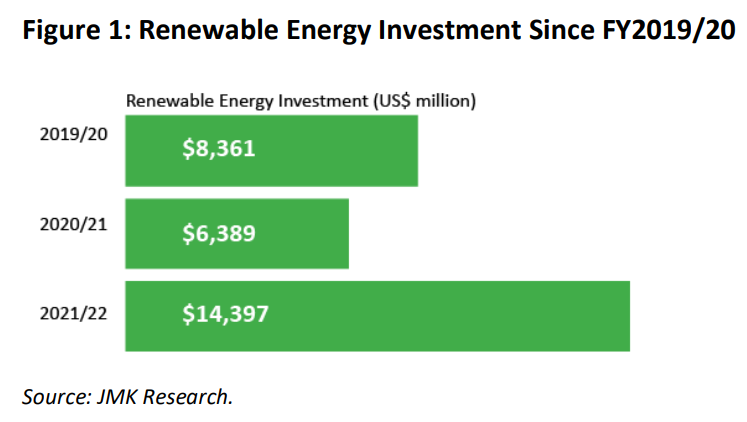
Due to the low cost of labor and a sharp increase in imports of Chinese solar panels India is maximizing investments to produce some of the cheapest solar energy in the world. The accessibility of solar energy has increased demand and expanding access to cheap electricity in rural areas. According to the UN (2022), Modhera is India’s first solar-powered village wherein residents are not just saving considerable amounts on electricity bills, but some are able to sell excess electricity back to the grid and earn a small income. UN Secretary-General António Guterres who visited the village remarked that it demonstrated how addressing climate change on a global level also has demonstrable benefits at the communal level (UN, 2022). Solar power will become an increasingly important aspect of India’s energy mix, however in order for the increase in solar output to better support the country’s energy and environmental security the Indian government must strategically pursue more domestic production of solar panels. If India continues to rely on imported material from China, South Korea, Taiwan, and the United States to construct its solar energy ecosystem it risks a similar dependency that is currently creating vulnerabilities it its oil and gas sector.
Wind Energy
The Indian Government has identified wind energy as an important aspect of its proposed renewable energy mix. According to research published by The Standing Committee on Energy report titled, ‘Evaluation of Wind Energy in India’ the country’s installed capacity was 41 GW with a potential for 200 GW total (Singh, 2022). Wind energy has not received the level of attention and investment that solar has in India according to Singh (2022, para. 1) who notes, “wind has increased by 93% as compared to a 2064% increase in solar power”. India’s domestic development of wind energy is strong however and an enlarged focus on developing wind capacity may be an important contribution to the country’s energy security. However, development of wind energy presents challenges due to the remote locations that are most viable for generating electricity. To efficiently exploit wind as a resource in urban areas where demand is the highest the country’s grid system will require extensive improvements (Abraham, 2023). Additionally, policy restructure could better incentivize private sector investment in wind energy. Currently, the tariff system reduces the profitability of large-scale wind projects making them unviable for companies (Singh, 2022). The government must address the tariff structure in such a way that it encourages private and global investment to maximize the potential of the industry.
Nuclear Power
Expanding nuclear output may be one of the most difficult aspects of restructuring India’s energy mix. Generating more nuclear energy requires strategic navigation of the complex geopolitical environment that regulates the sale of uranium. India has a very small domestic supply of uranium and would need to on imports and global partnerships to support its nuclear industry (Sharma, 2019). The country also has strict domestic regulations that have historically discouraged international investment. Restructuring domestic policy could have a significant impact on the nuclear industry and incentivize more public-private partnerships. The development of SMR technology may provide the catalyst for reform in India’s nuclear sector. The cheaper alternative to traditional nuclear facilities can be incrementally developed to suit the growing demand safely. For expansion in the nuclear sector India must strategically pursue inclusion in the Nuclear Suppliers Group (NSG), reform domestic policy to encourage private sector participation, and actively educate the Indian public who are wary of the dangers associated with nuclear plants. Historically India’s development of a nuclear weapon was at odds with the U.S. goal to create and enforce a global nuclear regulation regime discouraging proliferation. By isolating India from the Nuclear Suppliers Group the U.S. significantly impacted India’s domestic development of a civilian nuclear program. Through strategic diplomacy India reached an agreement with
Discussion
Energy Politics
The need to decarbonize is India’s most pressing issue at the nexus of energy and environmental security, resilience, and reliability. Adapting systems to that need within a time horizon that does not upset the delicate equilibrium between economic output and the availability of energy is essential to the decarbonization process. However India’s energy needs, goals, and ultimately its energy security are intricately linked to global markets, resources, and geopolitics. Energy diplomacy will be at the core of the country’s ability to decarbonize. Whether pursuing acceptance in the NSG, acquiring cobalt, or lithium abroad to build lithium batteries, or continuing to secure oil and natural gas India’s energy politics play a crucial role in ensuring the countries energy security. The country is poised to transition from a middle-income country with regional influence into a global power if it continues to develop at the pace that it is currently. The regional, and global complexity of India’s positioning creates some significant diplomatic challenges that can be overcome but will require foresight and domestic stability. As a democracy India shares cultural, political, and ideological ties with the United States and the E.U. however it has hesitated to align itself with the West in condemning the Russian invasion of Ukraine. India receives oil, natural gas, and weapons from Russia that are important to national and energy security needs. The country’s border disputes with longtime rival Pakistan, and the emergent world power, China, create additional geostrategic complexities. As noted previously, India is currently reliant on Chinese imports to sustain the growth of its solar energy capacity. Tensions in the border region of Eastern Ladakh have intermittently escalated A low levels of violence however successive rounds of talks have been held to attempt to defuse the situation (The New Indian Express, 2023). Conflict with China would be devastating to India’s development and decarbonization goals. While it is unlikely that occurs soon, India’s ambitious goals may exacerbate already present tensions with its Chinese neighbors and their Pakistani ally. India has delicately balanced trade, security, and economic ties with Western powers, as well as Russia and China. Worsening tensions between these increasingly divided power blocs could place India in the challenging position of having to make difficult decisions about its alliances. Indian imports of American oil have fluctuated according to supply and demand factors but as recent as 2021 the United States was India’s second largest supplier of oil after Iraq providing 14% of the country’s oil needs (Verma, 2021). Trade competition between the U.S. and China, as well as the long COVID-19 lockdowns in China contributed to a shift in industrial manufacturing from China to India. Large companies such as Apple have moved a small portion of their manufacturing to India in a shift that could support India’s goal of developing its export capacity (Wakabayashi & Mickle, 2022). Improving energy infrastructure, reliability, and security is key to improving the country’s export capacity and becoming an alternative to Chinese manufacturing while labor costs in India remain low could be a factor in India’s increasing global influence.
Industrialization and Urbanization
Increasing industrialization will influence the already rapid urbanization of Indian cities impacting energy consumption and demand. According to the IEA (2021g, para. 1), “How fast India urbanises and industrialises over the coming decades, and which policies govern these processes, will be of crucial significance for its energy future and for global trends”. Currently, the services sector is the largest and fastest growing sector of the Indian economy (Mukherjee, 2013). The services sector is less energy intensive but increasing industrialization would place greater demand on India’s energy supply. Industrialization is also a driver of urbanization, which can amplify pressure on the electricity system and energy reliability. Urbanization is a difficult trend to plan for and India’s cities have struggled to invest in infrastructure at pace with the growth of cities. Estimations predict that India will add some 270 million people to its urban population from now until 2040, roughly a city the size of Los Angeles annually (IEA, 2021g). This is a significant amount of demand that will be challenging to meet while adhering to the country’s environmental goals. Much of the infrastructure development that needs to happen in order to support the urbanization process exists at the nexus of a range of human security and development dimensions. Providing residents with clean water, sewage services, electricity, traversable roads, and other critical needs are important to supporting the wellbeing of the population and all of these require accessible energy. The country has struggled with urban planning and development for decades. A lack of affordable housing in most of India’s major cities has created some of the world’s largest slums in cities such as Mumbai and Calcutta. The growth of the Indian middle-class in the previous decade has led to displacement in slums, many of which are in desirable locations within cities and have been acquired by real estate developers or cleared by the government. This explosive growth is necessary to house the country’s population but it may come at the expense of vulnerable populations and environmental security. According to the World Economic Forum in 2019 (para. 2), “buildings in India account for 40% energy use, 30% raw material use, 20% water use and 20% land use” and, “the sector is responsible for 24% of India’s annual CO2 emissions”. The implications of this growth and how sustainably it is approached are hugely important for the global climate and economy. Some of India’s largest cities are comparable to the GDPs of entire countries.
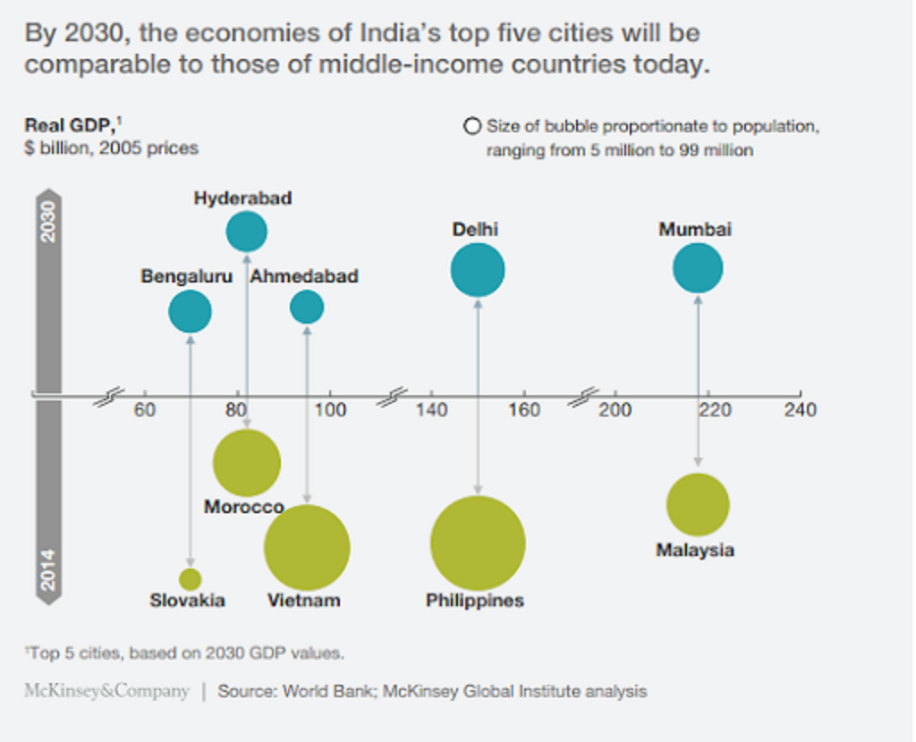
Industrialization, urbanization, and population growth support India’s economy in many important ways. However, each of these dimensions of India’s sociopolitical and economic trends place pressure on the country’s energy systems. It is important that the country balance the expectations of its population against its means and promote equal opportunities across communities. Similarly to the idea of a just transition in its decarbonization process, the urbanization and industrialization of the country must be equitable in order to sustain social stability. If these processes exacerbate long-standing inequalities in Indian society, they could be a driver of social instability or conflict.
Domestic Stability
As an ethnically, religiously, and linguistically diverse and democratic society India is committed to maintaining plurality in many of its foundational documents. Abolishing the caste system, promoting religious tolerance, and ethno-linguistic equality have been important to building a national identity since its independence. The current Modi government has been criticized as a Hindu nationalist government that is inciting anti-Muslim sentiment across the country and particularly in the Northern states. An extensive study by Ashutosh Varshney purports that social conflict between Muslim and Hindu’s in India is more likely in communities that are not deeply integrated and is quoted by Guelke (2013 p. 52) as stating “Varshney found that, in accounting for the difference between communal peace and violence, ‘the pre-existing local networks of civic engagement between the two communities stand out as the single most important proximate cause’”. Intermittent, inter-communal violence would be detrimental to the country’s development goals and ambitions as a global power. If the Modi government is incapable of promoting social stability it could be a disruptive factor that derails the country’s ambitious plans to influence regional and international power structures. According to Ogden (2019, para 6), “separatism, insurgency, and communal violence have resulted in the deaths of 65,500 citizens, security personnel, and terrorists / separatists between 1994 and 2015” highlighting the impact of domestic instability in the country. Addressing those longstanding security concerns has significant implications for the country’s energy security. India maintains a large standing army and is one of the world’s biggest weapons importers. The energy needs required to build and support such a large armed services diverts resources from other sectors of industry and infrastructure. India is already hugely important to the global energy economy, international politics, and the global economy more holistically. The country is well-positioned to transition into a superpower in much the same way that China has. Maintaining domestic stability is crucial to that transition and an integral part of realizing the country’s full potential. A lack of social stability would add a complicating factor to all of India’s development ambitions.
References
Abinash M., & Wadhawan S., (2021). Mapping India’s Climate Vulnerability: A District-Level Assessment. New Delhi: Council on Energy, Environment and Water
Abraham, C. (2023). Wind Energy: Potential of India. Clear IAS. https://www.clearias.com/wind-energy/
Agrawal, S., Sunil M., Abhishek J., and Karthik G. 2020. State of Electricity Access in India: Insights from the India Residential Energy Consumption Survey (IRES) 2020. New Delhi: Council on Energy, Environment and Water.
Ahmadi, S., Saboohi, Y., & Vakili, A. (2021). Frameworks, quantitative indicators, characters, and modeling approaches to analysis of energy system resilience: A review. Renewable & Sustainable Energy Reviews, 144, 110988. https://doi.org/10.1016/j.rser.2021.110988
Armstrong, M. (2022, September 29). This chart shows the growth of India’s economy. World Economic Forum. https://www.weforum.org/agenda/2022/09/india-uk-fifth-largest-economy-world/
Bhatti, J. (2021). Making India energy-independent by 2047: A look at PM Modi’s blueprint. https://www.downtoearth.org.in/blog/energy-efficiency/making-india-energy-independent-by-2047-a-look-at-pm-modi-s-blueprint-78528
Chandra, M. (2015) Environmental Concerns in India: Problems and Solutions. Journal of International Business and Law: Vol. 15: Iss. 1, Article 1.
CEIC. (2022). India Coal: Production: Jharkhand. www.ceicdata.com. https://www.ceicdata.com/en/india/coal-production-by-major-states/coal-production-jharkhand
Choudhury B. (2023, January 6). India taking steps for developing small modular reactors - Nuclear Asia. Nuclear Asia. https://www.nuclearasia.com/feature/india-taking-steps-for-developing-small-modular-reactors/4927/
Choudhury, B. (2020, August 21). The whys of the slow pace of Indian nuclear power development - Nuclear Asia. Nuclear Asia. https://www.nuclearasia.com/views/the-whys-of-the-slow-pace-of-indian-nuclear-power-development/3831/
Deese, D. A. (1979). Energy: Economics, Politics, and Security. International Security, 4(3), 140–153. https://doi.org/10.2307/2626698
Deshmane, A. (2022, February 24). How a just transition can make India’s coal history. BBC. https://www.bbc.com/future/article/20211103-india-how-a-just-transition-can-make-coal-history
Drèze, J., & Sen, A. (2010). India: development and participation. 2nd ed. Oxford: Oxford University Press.
Duttagupta, R., & Pazarbasioglu, C. (2021, June 1). Miles to Go: The Future of Emerging Markets – IMF F&D. https://www.imf.org/external/pubs/ft/fandd/2021/06/the-future-of-emerging-markets-duttagupta-and-pazarbasioglu.htm
Eisenberg, A. M. (2018). Just transitions. S. Cal. L. Rev., 92, 273.
Ezell, S., & Atkinson, R. (2014). The Indian economy at a crossroads. The Information.
Guelke, A. (2013). Politics in Deeply Divided Societies. John Wiley & Sons.
Harriss-White, B., & Heyer, J. (Eds.). (2014). Indian capitalism in development. Taylor & Francis Group.
Hydro Review Content Directors. (2019). Chief ministers sign agreement to develop 300-MW Lakhwar Multi-Purpose project in India. Hydro Review. https://www.hydroreview.com/business-finance/chief-ministers-sign-agreement-to-develop-300-mw-lakhwar-multi-purpose-project-in-india/
IEA. (2022a). Energy security – Topics - IEA. https://www.iea.org/topics/energy-security
IEA. (2022b). Policy database – Data & Statistics. IEA. https://www.iea.org/policies?country%5B0%5D=India
IEA (2021c), India Energy Outlook 2021, IEA, Paris https://www.iea.org/reports/india-energy-outlook-2021, License: CC BY 4.0
IEA (2020d), India 2020, IEA, Paris https://www.iea.org/reports/india-2020, License: CC BY 4.0
IEA (2015e), Understanding Energy Challenges in India: Policies, Players and Issues, IEA Partner Country Series, IEA, Paris, https://doi.org/10.1787/9789264247444-en.
IEA. (2021f). Hydropower in India - Event - IEA. https://www.iea.org/events/hydropower-in-india
IEA. (2021g). Urbanisation and industrialisation in India – India Energy Outlook 2021 – Analysis. https://www.iea.org/reports/india-energy-outlook-2021/urbanisation-and-industrialisation-in-india
IHA. (2022). Country profile: India. The International Hydropower Association. https://www.hydropower.org/country-profiles/india
Igini, M. (2023, January 9). 5 Biggest Environmental Issues in India in 2023. Earth.Org. https://earth.org/environmental-issues-in-india/
Janardhanan, N. K, (2017). India’s Energy Policy: Energy Needs and Climate Change. In Indian and Chinese Energy Policies: Addressing Energy Needs and Climate Change (pp. 3–8). Institute of Peace and Conflict Studies. http://www.jstor.org/stable/resrep09398.4
Joshi, A. (2022). India Installs a Record 10 GW of Solar in 9M 2022. Mercomindia.com. https://www.mercomindia.com/india-installs-a-record-10-gw-of-solar-in-9m-2022
Kale VV (2017). Energy management and commercialization for renewable energy sources in India. International Journal for Scientific Research and Development 116–121. Available at: http://www.ijsrd.com/articles/ETCOP026.pdf
Khan, A. (2022). Anti-Nuclear Movement in India: Protests in Kudankulam and Jaitapur. South Asia Research, 42(1), 7–20. https://doi.org/10.1177/02627280211054795
Khashimwo, P. (2021). India’s Quest for Energy Security: Understanding the Trends and Challenges. Journal of Asian and African Studies, 56(7), 1503–1520. https://doi.org/10.1177/0021909620972443
Kumar, A. (2016). India’s energy security and pipeline politics. International Research Journal of Management Sociology and Humanity, 7(8), 25-30.
Lal, D. (2008). An Indian Economic Miracle? Cato Journal, 28(1), 11–34. https://doi.org/http://www.cato.org/pubs/journal/index.html
Mahapatra, S., & Birkman, L. (2021). India’s Climate Conundrum: Addressing the climate-food-poverty nexus in Odisha province. Hague Centre for Strategic Studies. http://www.jstor.org/stable/resrep38746
McKinsey & Co. (2014). India: Towards Energy Independence 2030. In McKinsey & Co. https://www.mckinsey.com/industries/oil-and-gas/our-insights/india-towards-energy-independence-2030
MNRE. (2023). Physical Progress. https://mnre.gov.in/the-ministry/physical-progress
Mukherjee, A. (2013). The Service Sector in India. © Asian Development Bank. http://hdl.handle.net/11540/2314. License: CC BY 3.0 IGO.
Ningthoujam, J., & Singh, N. (2022, July 23). India’s Power Sector Must Plan for Climate Resilience. RMI. https://rmi.org/indias-power-sector-must-plan-for-climate-resilience/
Novikau, A. (2020). Energy Security: Evolution of a Concept. In: Romaniuk, S., Thapa, M., Marton, P. (eds) The Palgrave Encyclopedia of Global Security Studies. Palgrave Macmillan, Cham. https://doi.org/10.1007/978-3-319-74336-3_491-
Osborn, J., & Kawann, C. (2002). Reliability of the US electric system--Recent trends and current issues.
Qatar Tribune. (2023, January 29). ‘India’s 1.4 bn population could become world economy’s new growth engine.’ Qatar Tribune. https://www.qatar-tribune.com/article/47040/business/indias-14-bn-population-could-become-world-economys-new-growth-engine
Rehak, D., Senovsky, P., Hromada, M., & Lovecek, T. (2019). Complex approach to assessing resilience of critical infrastructure elements. International Journal of Critical Infrastructure Protection, 25, 125–138. https://doi.org/10.1016/j.ijcip.2019.03.003
Sarkar, B. (2023). Draft guidelines to promote development of Pump Storage Projects (PSP) in the country. Ministry of Power. https://powermin.gov.in/sites/default/files/webform/notices/Draft_Guidelines_to_promote_development_of_PSPs_in_the_Country_Seeking_Comments.pdf
Sharma, A. (2019). India's pursuit of energy security: domestic measures, foreign policy, and geopolitics. First edition. Mathura Road: SAGE Publications Pvt. Ltd.
Singh, K., & Kaur, J. (2022). Do Energy Consumption and Carbon Emissions Impact Economic Growth? New Insights from India Using ARDL Approach. OPEC Energy Review, 46(1), 68–105.
Tongia, R., & Gross, S. (2022, March 9). Coal in India. Brookings. https://www.brookings.edu/research/coal-in-india/
UN. (2022, October 24). India’s first solar-powered village promotes green energy, sustainability, and self-reliance. UN News. https://news.un.org/en/story/2022/10/1129802
World Energy Council. (2021). World Energy Trilemma Index. https://www.worldenergy.org/assets/downloads/WE_Trilemma_Index_2021.pdf?v=1634811254
Zhang, P., & Peeta, S. (2011). A generalized modeling framework to analyze interdependencies among infrastructure systems. Transportation Research Part B-Methodological, 45(3), 553–579. https://doi.org/10.1016/j.trb.2010.10.001
Lightly edited for the web from the original submission. Citations follow APA style.